Green Logistics — Low-Carbon Transportation
As global expectations for environmental sustainability continue to rise, integrating ESG principles into supply chain operations has become a critical strategic priority for enterprises. Winbond actively supports its corporate sustainability policies by implementing systematic management and precise analysis of carbon emissions generated throughout transportation processes.
By integrating carbon emissions data from environmental authorities and logistics partners, the company is able to effectively monitor the carbon footprint across all stages of transportation. Based on these insights, targeted carbon reduction strategies have been developed and implemented, driving a gradual transition toward low-carbon operations and demonstrating the company’s concrete commitment to environmental responsibility.
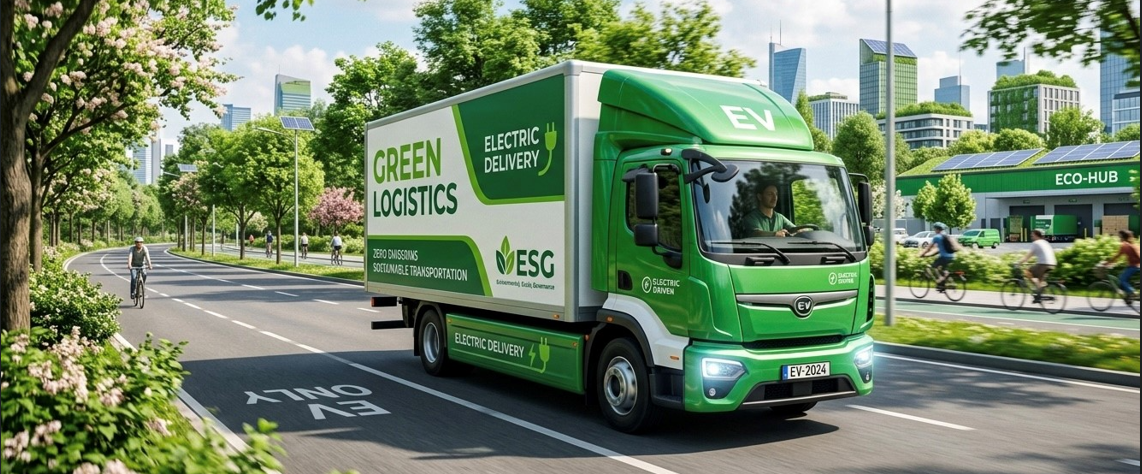
Global Trends in Low-Carbon Transportation and Green Logistics
Policy-Driven Supply Chain Decarbonization
Major economies, including the European Union, the United States, and China, continue to promote carbon reduction policies such as the European Green Deal and carbon neutrality targets. These initiatives impose increasingly stringent decarbonization requirements on the logistics and transportation sectors.
The European Union has further introduced the Carbon Border Adjustment Mechanism (CBAM), requiring imported products to disclose and reduce their carbon footprint, thereby accelerating global supply chain transformation. Meanwhile, international organizations such as the International Maritime Organization (IMO) and the International Civil Aviation Organization (ICAO) are strengthening emissions regulations, driving the transportation industry toward comprehensive decarbonization.
Technological Innovation Accelerating Decarbonization
Leading global logistics companies are actively investing in electric vehicles (EVs), hydrogen-powered fleets, and Sustainable Aviation Fuel (SAF). By combining these initiatives with AI, big data analytics, and IoT technologies, transportation routes and loading efficiency are continuously optimized.
These digital applications not only significantly reduce carbon emissions but also enhance supply chain transparency, enabling enterprises to more accurately monitor and manage their Scope 3 emissions.
Green Logistics as a Competitive Differentiator
More than 5,000 companies worldwide have adopted Science-Based Targets (SBTi) and incorporated logistics decarbonization into supplier evaluation standards.
In the future, logistics providers lacking carbon reduction capabilities will face the risk of losing business opportunities and increased operational costs. Green logistics has evolved from an added-value option into a core driver of corporate competitiveness.
Low-Carbon Transportation Partner Strategy
Establishing Low-Carbon Capability as a Key Selection Criterion
Since 2025, Winbond has formally established “low-carbon transportation capability” as a key supplier selection criterion. Through the strategic adoption of low-carbon logistics solutions, the company systematically reduces its overall transportation carbon footprint while aligning with global decarbonization trends.
Key Achievements in Adopting Low-Carbon Transportation Partners
1. Enhanced Transportation Quality and Reduced Unnecessary Emissions
The low-carbon transportation partner achieved a zero-defect performance record in transportation operations from 2024 to 2025.
This not only ensures safe and on-time delivery but also effectively avoids additional emissions caused by rework or reshipment, thereby improving both operational efficiency and sustainability performance.
2. Significant and Measurable Carbon Reduction
The low-carbon transportation partner has achieved approximately 30% lower average carbon emissions compared to industry peers.
For example, in the first quarter of 2026 alone, carbon emissions were reduced by 90,690 kg CO₂e. On an annual basis, this represents an estimated reduction of approximately 362,000 kg CO₂e, making a substantial contribution to the company’s overall ESG targets.
3. Sustainable and Impactful Decarbonization Measures
Through a fully self-operated logistics network supporting diverse transportation applications, the low-carbon partner is able to comprehensively implement carbon reduction strategies, including:
• Phasing out high energy-consuming aircraft to improve energy efficiency
• Deploying electric vehicle fleets to reduce ground transportation emissions
• Installing solar energy systems to increase the use of renewable energy
• Developing innovative delivery solutions to further optimize supply chain carbon management
These initiatives focus on direct emissions reduction at the source, rather than relying solely on carbon offsetting, ensuring continuous and meaningful reductions in transportation-related emissions.
Based on a comprehensive evaluation of transportation quality, carbon reduction performance, and long-term sustainability capability, the low-carbon transportation partner has demonstrated clear, measurable, and quantifiable advantages.
Since 2025, adopting this partner as the primary logistics provider has not only significantly reduced carbon emissions but also strengthened supply chain resilience and enhanced ESG competitiveness. This approach supports the company’s continued growth in alignment with global sustainability trends.